
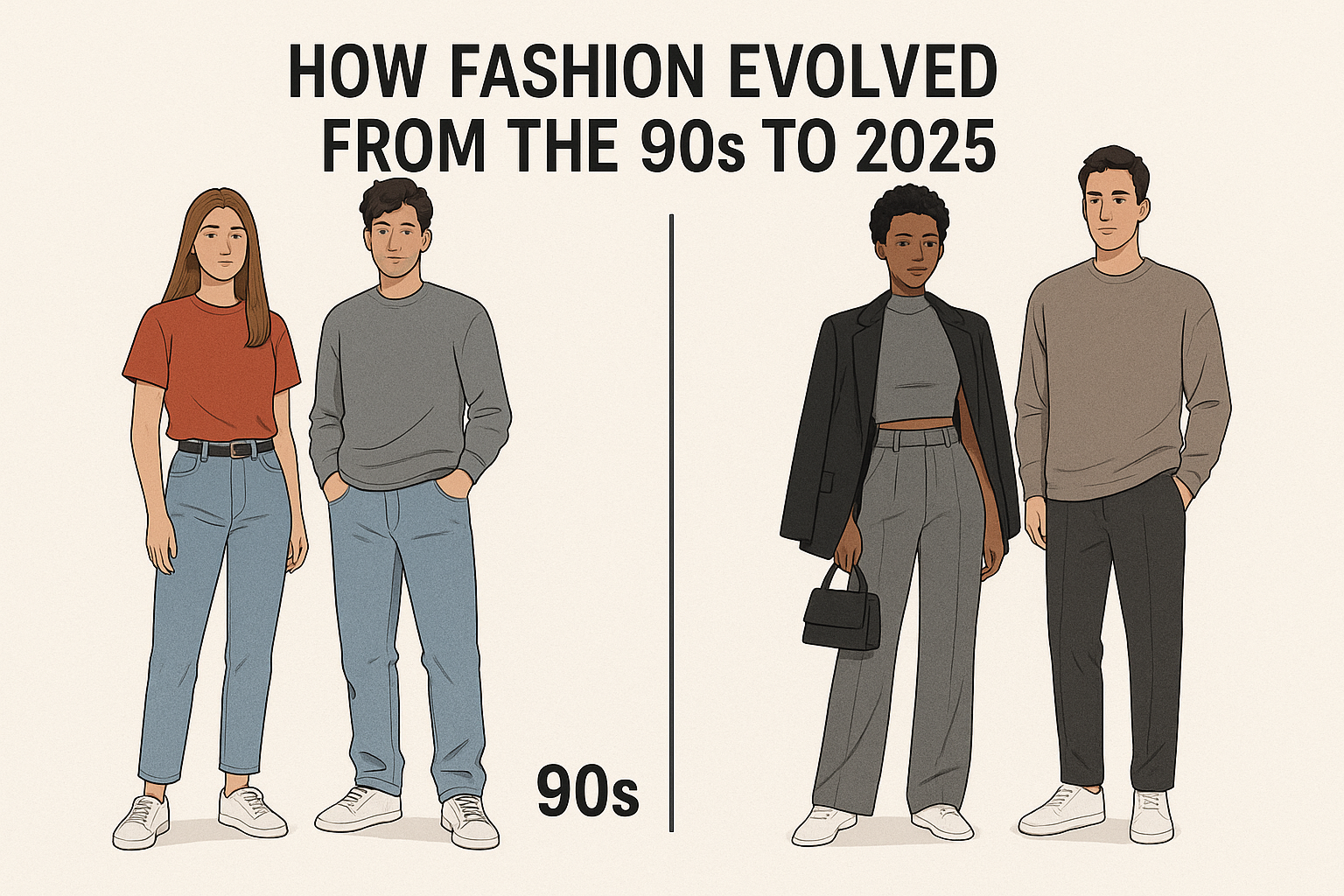
How Fashion Evolved from the 90s to 2025
Fashion is a reflection of culture, technology, and lifestyle. Over the past three decades, the way we dress has undergone a massive transformation, shaped by social movements, pop culture, sustainability, and innovation. From the grunge-heavy 90s to the tech-driven trends of 2025, fashion has evolved into something more than just clothing — it has become self-expression, identity, and functionality combined.
we’ll explore how fashion evolved from the 90s to 2025, breaking it down by decades and highlighting the trends, influences, and innovations that shaped our style journey.
1. The 90s: Minimalism, Grunge & Pop Culture Icons
The 1990s were defined by two opposite fashion extremes: minimalist chic and rebellious grunge. Influenced by music, cinema, and supermodels, this decade was the beginning of effortless dressing.
Key Trends of the 90s
- Grunge Aesthetic – Oversized flannels, ripped jeans, and band tees inspired by rock culture.
- Slip Dresses – Thanks to minimalism, silky slip dresses became an evening staple.
- Mom Jeans & High-Waist Denim – Straight cuts and relaxed fits dominated.
- Logomania – Brands like Calvin Klein and Tommy Hilfiger made logo tees iconic.
- Athleisure Beginnings – Tracksuits and sneakers entered mainstream fashion.
The 90s created a foundation of timeless styles that continue to influence wardrobes today.
2. The 2000s: Y2K Maximalism & Experimental Fashion
If the 90s were minimal, the 2000s were the opposite — bold, colorful, and experimental. The Y2K aesthetic took over, inspired by early internet culture and futuristic optimism.
Key Trends of the 2000s
- Low-Rise Everything – Jeans, skirts, and cargos sat below the waist.
- Baby Tees & Crop Tops – Playful, fitted tops became everyday essentials.
- Metallics & Shiny Fabrics – Reflecting tech-driven optimism, silver and glossy finishes were everywhere.
- Logo Obsession 2.0 – Luxury brands like Gucci, Louis Vuitton, and Dior embraced monogram-heavy designs.
- Mini Bags & Statement Belts – Accessories became bold, quirky, and experimental.
The 2000s were fearless in mixing prints, textures, and silhouettes, making it one of the most nostalgic eras in fashion history.
3. The 2010s: Fast Fashion, Instagram & Minimal Luxe
The 2010s marked the rise of fast fashion and social media influence. Fashion became instant, accessible, and globalized. Trends moved faster than ever before, thanks to platforms like Instagram and Pinterest.
Key Trends of the 2010s
- Skinny Jeans & Jeggings – Body-hugging fits dominated streetwear.
- Athleisure Explosion – Leggings, sports bras, and sneakers became everyday staples.
- Minimal Luxe – Neutral tones, tailored blazers, and structured silhouettes gained popularity.
- High-Street Takeover – Brands like Zara, H&M, and Forever 21 made runway trends affordable.
- Influencer Fashion – Social media influencers started driving consumer tastes.
The 2010s blurred the lines between luxury and street style, setting the stage for fashion democratization.
4. The 2020s: Comfort, Sustainability & Tech-Driven Style
The early 2020s reshaped fashion like never before. The pandemic sparked a comfort-first mindset, while sustainability and digital innovation became the core focus of the industry.
Key Trends of the 2020s
- Loungewear Luxe – Oversized hoodies, joggers, and co-ords dominate wardrobes.
- Oversized Everything – From blazers to shirts, relaxed fits became mainstream.
- Gender-Neutral Fashion – Unisex clothing gained massive acceptance.
- Thrift Culture & Circular Fashion – Second-hand shopping and recycling became cool.
- Tech Integration – AR try-ons, virtual fashion shows, and AI-driven styling redefined shopping.
The 2020s introduced a digital revolution in fashion, merging sustainability with technology and pushing boundaries in design and accessibility.
5. The Y2K Revival & Nostalgia Wave
Interestingly, 2023-2025 saw a full-blown Y2K comeback. Many trends from the 90s and 2000s returned, but in modernized, wearable forms.
Examples of Trends Making a Comeback
- Cargo pants → Now in sleeker silhouettes and muted tones.
- Baby tees → Minimalist, solid colors replacing loud graphics.
- Platform shoes → Upgraded with luxury materials and ergonomic designs.
- Tube tops → Styled with oversized blazers and structured skirts.
- Denim-on-denim → Balanced with contrasting washes and tailored fits.
This nostalgia-driven approach has allowed Gen Z and Millennials to merge past aesthetics with modern styling.
6. Fashion in 2025: Where We Are Now
By 2025, fashion is no longer just about trends — it’s about functionality, individuality, and sustainability. Shoppers want versatility and personalization over mass consumption.
Current Highlights
- AI-Powered Styling – Virtual try-ons and AI-curated outfit suggestions dominate online shopping.
- Sustainable Innovation – Bio-fabrics, recycled textiles, and zero-waste production are becoming standard.
- Hyper-Personalization – Brands create custom fits based on your body measurements.
- Digital Fashion – Virtual garments and NFT fashion collections are redefining style in the metaverse.
- Timeless Minimalism – While bold trends exist, classic monochromatic wardrobes are trending heavily.
In 2025, the future of fashion blends heritage with innovation, letting you embrace both nostalgia and progress.
7. The Evolution Timeline at a Glance
| Era | Key Vibes | Signature Trends |
|---|---|---|
| 1990s | Minimal + Grunge | Slip dresses, mom jeans, plaid flannels |
| 2000s | Y2K Maximalism | Low-rise jeans, metallics, baby tees |
| 2010s | Fast Fashion Boom | Skinny jeans, athleisure, influencer-led looks |
| 2020s | Comfort + Sustainability | Oversized fits, loungewear, thrift shopping |
| 2025 | Tech + Timelessness | AI styling, bio-fabrics, monochrome minimalism |
8. Styling Tips to Blend Past & Present
Want to recreate nostalgic looks while keeping them fresh and modern? Here’s how:
- Mix old with new → Pair Y2K cargo pants with 2025’s monochrome basics.
- Focus on tailoring → Even oversized pieces look polished with structured cuts.
- Accessorize smartly → Update 90s baguette bags with metallic finishes.
- Choose sustainable fabrics → Upgrade vintage-inspired outfits with eco-friendly materials.
Conclusion
Fashion has transformed from grunge rebellion in the 90s to tech-integrated sustainability in 2025. The journey reflects changing lifestyles, evolving values, and digital disruption. Today’s style is no longer about blindly following trends — it’s about personal expression, comfort, and conscious choices.
Looking back, the nostalgia of the 90s and 2000s blends beautifully with the innovation of 2025. Understanding how fashion evolved from the 90s to 2025 helps us appreciate the creativity behind past trends while embracing the future of clothing.
Fashion, after all, isn’t just about what we wear — it’s about who we are and how we express ourselves in an ever-changing world.
- Categories:
- Fashion